
PAPPAD
(Traditional Bhatia Poppadum)

Recipe Overview
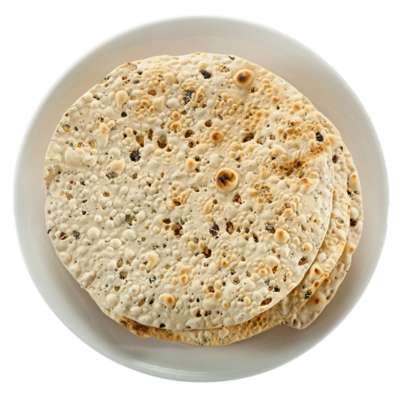
Pappad is an essential part of the Thathai Bhatia culinary tradition, prepared using a
seasoned lentil flour dough that is rolled thin and sun-dried. Known for its crisp texture
and distinctive flavour, it is a staple accompaniment enjoyed roasted or fried.
Recipe Details
– Cuisine: Sindhi–Bhatia
– Course: Accompaniment / Snack
– Diet: Vegetarian
– Servings: Makes approx. 80–100 pappads
– Preparation Time: 45 minutes (+ resting & sun-drying time)
– Cooking Time: 10 minutes (for roasting/frying)
– Difficulty Level: Medium
Ingredients
Main Ingredients
– Horse bean flour / Split black gram flour – 1 kg
– Water – ½ litre
– Mustard oil – 25 ml
Spices & Seasoning
– Cumin seeds – 2 tbsp
– Peppercorns – 2 tbsp (coarsely pounded)
– Dry coriander seeds – 2 tbsp (coarsely ground)
– Asafoetida (hing) – ¼ tsp
– Salt – 2 tbsp
– Pappad khar* – 2 tbsp
For Rolling
– Flour – 100 g (reserved for dusting)
* What is Pappad Khar?
Pappad khar (also known as Sajji Khar) is a traditional alkaline salt used in Indian cooking,
especially in making papads and certain snacks like Kheechio / Kheechio jo Besan.
– Composition: A natural blend of alkaline salts, primarily sodium carbonate and sodium
bicarbonate
– Purpose:
– Helps the dough become more elastic and easier to roll thin
– Creates the signature light, airy, and crisp texture when pappads are roasted or fried
– Acts as a natural preservative, extending shelf life
– Origin: Traditionally derived from mineral deposits or plant ash
– Substitute: A small quantity of baking soda may be used, though authentic texture
may vary
Method
Step 1: Prepare Pappad Khar Water
– Heat water in a pan over medium heat.
– Add pappad khar and salt, and bring to a boil.
– Cook until fully dissolved.
– Allow the mixture to cool, then strain through a muslin cloth.
– Set aside.
Step 2: Prepare the Dough Base
– In a large bowl, take half the flour and set aside the remaining half.
– Add cumin seeds, asafoetida, coarsely ground coriander seeds, and pounded peppercorns.
– Mix well.
– Gradually add the prepared pappad khar water to form a stiff dough.
– Cover and rest for 2–3 hours.
Step 3: Knead & Incorporate Remaining Flour
– Reserve 100 g of flour for dusting.
– Begin kneading the rested dough while gradually adding the remaining flour.
– Continue kneading until fully incorporated.
– The dough will become lighter in colour and may produce slight popping sounds—
this indicates proper kneading.
Step 4: Shape the Pappads
– Divide the dough into small portions (about the size of a large marble).
– Dip each portion lightly in mustard oil.
– Dust with reserved flour and roll into thin discs (approx. 6 inches in diameter)
on a floured surface.
Step 5: Sun-Drying
– Place the rolled pappads on a clean surface under direct sunlight.
– Dry until completely firm and deep yellow in colour.
– Store in an airtight container once fully dried.
Chef’s Tip
Proper kneading is key to achieving the right texture. The dough should become smooth,
elastic, and slightly airy—this ensures crisp pappads after drying.
Serving Suggestions
– Roast over an open flame for a light, smoky flavour
– Deep-fry until golden for a crisp texture
– Serve as an accompaniment with meals, especially dinner
Storage & Make-Ahead Tips
– Store sun-dried pappads in an airtight container
– Shelf life extends for several months in a cool, dry place
– Avoid moisture to maintain crispness
Nutritional Insight (Approximate)
– Good source of plant-based protein from lentil flour
– Light and digestible when roasted
– Spices aid digestion
Did You Know?
The freshness of a pappad can be judged by its texture—the crispier it is and
the more it crumbles while eating, the fresher it is considered to be.