
TURRANJ JO MURRABO
(Citron Marmalade)

Recipe Overview
Turranj jo Murrabo is a traditional sweet preserve made from citron, known for its unique
texture and rich, aromatic flavour. This delicacy reflects the ingenuity of preserving
seasonal produce and is enjoyed as a sweet accompaniment to meals.
What is Turranj (Citron)?


Turranj, known botanically as Citron, is one of the oldest cultivated citrus fruits and
is considered an ancestor of many modern citrus varieties, including lemons and oranges.
Unlike most citrus fruits, citron is valued primarily for its thick, fragrant rind and pith
rather than its juice, as it contains very little pulp and relatively little liquid. The fruit
is typically large, oval or irregularly shaped, with a rough, aromatic outer skin and
a distinctive citrus fragrance.
In Sindhi and Thathai Bhatia cuisine, Turranj is traditionally prepared by removing the outer
peel, cutting the inner pith into pieces, and sun-drying it for later use. Once dried, it can be
stored for extended periods and transformed into preserves such as Turranj jo Murrabo.
Key Characteristics of Turranj
– Thick, aromatic rind with minimal juice content
– Mildly bitter and tangy flavour when fresh
– Naturally rich in essential oils that contribute to its distinctive fragrance
– Traditionally sun-dried to extend shelf life
– Primarily used in preserves, candied preparations, and sweet accompaniments
Culinary Uses
Across different cultures, citron is used to prepare:
- Sweet preserves and marmalades
- Candied peel
- Festive desserts and confectionery
- Aromatic flavourings for baked goods and beverages
For the Thathai Bhatia community, Turranj represents an important example of traditional
food preservation, where seasonal produce is carefully processed and stored to be enjoyed
throughout the year. Its transformation into Murrabo reflects the community’s resourceful
approach to creating flavourful, long-lasting foods from locally available ingredients.
Recipe Details
– Cuisine: Indian / Sindhi–Bhatia
– Course: Accompaniment / Sweet Preserve
– Diet: Vegetarian
– Servings: 4–6 portions
– Preparation Time: 20 minutes (+ drying/soaking time)
– Cooking Time: 30 minutes
– Difficulty Level: Moderate
Ingredients
– Citron (Turranj) – 1 no. (medium-sized)
– Sugar – ½ kg
– Tejano (Milk Masala) – ½ tsp.
– Saffron – 7–8 strands
– Almonds (finely chopped) – 4 nos.
– Pistachios (finely chopped) – 4 nos.
Method
Step 1: Prepare the Turranj

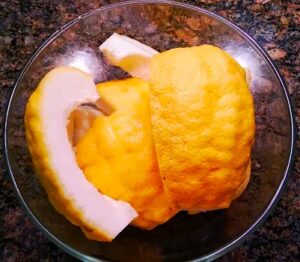
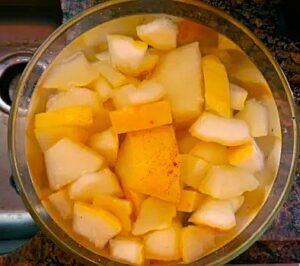

– For fresh Turranj: Cut the fruit open and separate the thick white pith from the outer
coloured peel. Discard the outer peel and any seeds. Cut the pith into small pieces, thread
them together if desired, and sun-dry until all moisture has evaporated completely.
– For dried Turranj: Boil the dried pieces until softened.
– Once softened, squeeze the pieces thoroughly to remove any excess water.
The Turranj must be as dry as possible before cooking to ensure the correct texture
and to prevent spoilage.
Step 2: Prepare the Sugar Syrup
– In a pan, make a sugar syrup of one-string consistency.
– Add saffron and stir until the syrup develops a rich orange hue.
Step 3: Combine
– Add the prepared Turranj pieces to the sugar syrup.
– Allow them to soak and cook gently so they absorb the syrup, soften, and
slightly expand in size.
Step 4: Garnish
– Add finely chopped almonds and pistachios. Mix gently.
Step 5: Cool & Store
– Allow the Murrabo to cool completely before storing.
Important Preparation Notes
– When sun-drying Turranj, the outer peel must be completely removed;
otherwise, the Murrabo will taste bitter.
– The pulp should be cut into small pieces, threaded together, and sun-dried thoroughly.
– Any retained moisture in the pulp can lead to spoilage or fungal growth.
– If using fresh Turranj, ensure the pieces are squeezed thoroughly to remove all
excess moisture before cooking.
Serving Suggestions
– Serve chilled as an accompaniment with meals.
– Pairs well with traditional Bhatia lunches and festive spreads.
Chef’s Tip
Ensure complete removal of moisture from the Turranj pulp before adding it to the
sugar syrup—this is critical for both texture and shelf life.
Variations
Turranj jo Murrabo is prepared differently across households, with subtle variations
in spices, sweetness, and garnishes reflecting family traditions and regional preferences.
– Rose-Scented Variation: Add a few dried rose petals or a small quantity of rose water
after cooking for a delicate floral aroma.
– Cardamom Variation: Incorporate freshly ground green cardamom along with the Tejano
for added warmth and fragrance.
– Nut-Rich Variation: Increase the quantity of almonds and pistachios or include cashews
for a richer texture and flavour.
– Jaggery Variation: Replace a portion of the sugar with jaggery to create a deeper,
caramel-like sweetness and a darker colour.
– Spiced Winter Variation: Add a pinch of nutmeg or extra saffron for a more warming
flavour profile during colder months.
– Mixed Citrus Variation: Combine citron with small quantities of candied orange or
sweet lime peel for a more complex citrus preserve.
– Reduced-Sugar Variation: Use slightly less sugar for a milder sweetness; however,
note that this may reduce the shelf life of the preserve.
– Dry Murrabo Variation: Cook the citron pieces longer until most of the syrup is absorbed,
resulting in a drier, candied preparation that can be enjoyed as a sweet snack.
– Festive Variation: Finish the Murrabo with edible silver leaf (varak) and additional saffron
strands for special occasions and ceremonial meals.
– Tejano-Free Variation: Omit the Tejano to highlight the natural citrus notes of the citron
and create a lighter, more delicate preserve.
Nutritional Insights
– Rich in natural sugars for quick energy
– Contains trace nutrients from nuts and spices
– Moderate in calories due to sugar content
Storage & Make-Ahead Tips
– Store in a clean, airtight container in the refrigerator
– Shelf life is approximately 15 days
– Always use a dry spoon to avoid contamination
Did You Know?
Citron has one of the thickest peels among citrus fruits, and unlike most citrus,
its pulp (rather than juice) is primarily used in traditional preserves like Murrabo.
Cultural Notes
Turranj, the Sindhi name for citron, grows in dry climates and is typically available during
winter. Due to its seasonal nature, the pulp is often sun-dried and preserved for
year-round use. Turranj jo Murrabo is a fine example of traditional preservation techniques,
combining practicality with rich flavour, and continues to be a cherished preparation
in Sindhi–Bhatia households.
can you please tell me where Turranj is available in dubai as well as abu dhabi. also what its called in english.
Turranj is called Citron in English. It might not be available in the local supermarkets or grocery stores in either Dubai or Abu Dhabi. Some private farms might be planting them.