
BOONDI
(Sweet Gram Flour Pearls)

Recipe Overview
Boondi is a beloved Indian preparation made from tiny pearl-like droplets of
gram flour batter fried in ghee or oil. The name originates from the Hindi word boond,
meaning “a drop,” referring to the tiny round droplets formed through a perforated ladle
known as a Boondi Jharan.
Prepared across the Indian subcontinent, Boondi is highly versatile and forms the base
for both sweet desserts and savoury snacks. Sweet Meethi Boondi is soaked in fragrant
saffron sugar syrup and commonly served during festivals, weddings, and temple offerings,
while savoury Khara Boondi is seasoned with spices and enjoyed in chaats, and raitas.
In Sindhi–Bhatia homes, sweet Boondi paired with savoury Besan or Sev remains
a timeless and nostalgic combination enjoyed across generations.
Recipe Details
– Cuisine: Sindhi–Bhatia / Indian
– Course: Sweet / Dessert / Prasad
– Diet: Vegetarian
– Servings: 4–6
– Preparation Time: 15 minutes
– Cooking Time: 25–30 minutes
– Difficulty Level: Moderate
Ingredients
For the Boondi
– Gram flour (Besan) – 100 gms.
– Water – 30 ml. (approx.)
– Ghee – for frying
For the Sugar Syrup
– Sugar – 100 gms.
– Water – 100 ml.
– Saffron – 1 gm.
For Garnish
– Almonds – 4 nos. (finely chopped)
– Pistachios (unsalted) – 4 nos. (finely chopped)
Method
Step 1: Prepare the Sugar Syrup
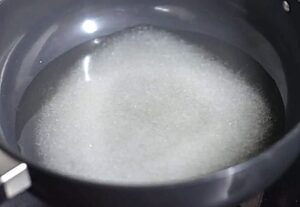

– In a pan, heat the water on a medium flame.
– Add the sugar and saffron strands.
– Stir continuously until the sugar dissolves completely.
– Continue cooking until the syrup reaches a one-string consistency.
– Remove from the flame and keep aside.
Step 2: Prepare the Batter
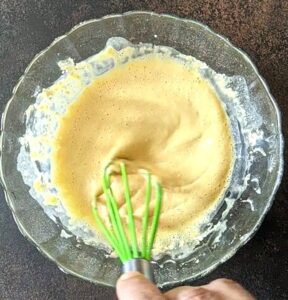
– In a bowl, combine the gram flour and water to make a smooth batter of
thick pouring consistency.
– Ensure that there are no lumps in the batter.
Step 3: Fry the Boondi
– Heat the ghee in a kadai on a medium flame.
– Hold a Boondi Jharan (perforated ladle) a few centimetres above the hot ghee.
– Pour a small quantity of batter onto the perforated ladle and allow it to drip
naturally into the hot ghee.
– Do not spread or press the batter with your hands, as this affects the
round shape of the Boondi.
Step 4: Cook the Pearls

– Fry the Boondi until firm and light golden-yellow in colour.
– Remove using a slotted spoon and place on absorbent paper.
– Allow the fried Boondi to cool for approximately 5 minutes.
Step 5: Soak in Sugar Syrup


– Immerse the cooled Boondi into the warm saffron sugar syrup.
– Allow the Boondi pearls to absorb the syrup thoroughly.
– As the syrup gets absorbed, the Boondi becomes soft, glossy, and slightly
sticky in consistency.
Step 6: Garnish & Finish

– Spread the Boondi lightly and allow it to dry slightly.
– Garnish with finely chopped almonds and pistachios before serving.
To Serve
Boondi is commonly served during lunch or dinner as a festive sweet, dessert,
or temple offering (Prasad).

A classic Sindhi–Bhatia combination pairs sweet Boondi with savoury Besan or Sev,
creating a delightful contrast of flavours and textures.
Chef’s Tip
– The batter consistency is crucial — if too thick, the droplets develop tiny “tails”;
if too thin, they become flat instead of round.
– Always allow the batter to drip naturally through the perforated ladle for
perfectly shaped Boondi pearls.
– The sugar syrup should be warm, not boiling hot, while soaking the Boondi.
– For extra crisp savoury Khara Boondi, a small quantity of rice flour may be
added to the batter.
Nutritional Insight
– Gram flour (Besan) is naturally rich in plant protein and fibre compared to
refined flour-based sweets.
– Almonds and pistachios provide healthy fats, antioxidants, and essential minerals.
– Saffron adds aroma and is traditionally believed to possess warming and
mood-enhancing properties.
– Since Boondi is fried and sugar-based, it is best enjoyed in moderation as a
festive indulgence.
Cultural Significance
Sweet Boondi holds a special place in Indian festive and religious traditions and
is frequently prepared during weddings, temple offerings, celebrations, and auspicious
occasions. It symbolises joy, prosperity, sharing, and abundance.
Savory Khara Boondi is equally popular in Indian households and is commonly added
to Raita, festive snack mixtures, and street-style chaats.
Variations
Sweet Boondi (Meethi Boondi)
– Soaked in saffron sugar syrup and flavoured with cardamom, rose water,
cloves, or edible camphor.
– Can be shaped into Boondi Laddoos by lightly binding the syrup-soaked pearls together.
Savory Boondi (Khara / Kara Boondi)
– Seasoned with salt, turmeric, red chilli powder, and hing.
– Often tossed with fried curry leaves, peanuts, and cashews for festive snack mixes.
– Commonly used in Boondi Raita and Indian chaats.
Storage & Make-Ahead Tips
– Store sweet Boondi in an airtight container at room temperature for 3–4 days.
– Refrigeration may slightly harden the texture.
– Unsweetened fried Boondi can be prepared ahead and soaked in syrup before serving.
– Savory Boondi remains crisp longer when stored in an airtight container away
from moisture.
Did You Know?
The specialised perforated ladle used for making Boondi is traditionally called a Jharan.
The size of its holes determines whether the Boondi turns out tiny and delicate or larger
and more textured.