
UFRATO
(Layered Whole Wheat Flatbread)

Recipe Overview
Ufrato is a traditional layered flatbread, characterised by its flaky texture and rich taste
from the use of ghee. Carefully rolled and folded, it develops delicate layers that crisp up
beautifully when cooked, making it a wholesome and indulgent bread option.
Recipe Details
– Cuisine: Sindhi–Bhatia
– Course: Bread / Breakfast
– Diet: Vegetarian
– Servings: 4 ufratos
– Preparation Time: 15 minutes (+ resting time)
– Cooking Time: 20 minutes
– Difficulty Level: Moderate
Ingredients
Main Ingredients
– Whole wheat flour – 1 cup
– Salt – to taste
– Ghee – 3 tbsp (for layering)
– Water – as required (to knead)
For Dusting
– Whole wheat flour – 1 tbsp
For Cooking
– Ghee – as required
Method
Step 1: Prepare the Dough


– In a mixing bowl (paat), combine whole wheat flour and salt.
– Add 1 tbsp ghee and sufficient water to knead into a semi-soft dough.
– Cover and allow the dough to rest for 15–20 minutes.
Step 2: Shape the Layers


– Divide the dough into 4 equal portions.
– Roll each portion into a circular disc.
– Apply ghee evenly over the surface, avoiding the edges, and sprinkle lightly with dry flour.
Step 3: Create the Layers


– Roll the disc tightly from one edge to the other (similar to a scroll or log).
– Flatten the rolled dough gently and shape it into a round.
– Roll it out again into a medium-thick disc.
Step 4: Cook the Ufrato


– Heat a tawa on medium flame.
– Place the rolled Ufrato on the tawa and cook on both sides.
– Apply ghee along the edges while cooking, turning occasionally, until golden brown
and crisp.
Chef’s Tip
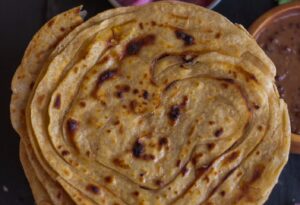
– Proper layering and gentle rolling are key to achieving the characteristic flaky texture.
– Avoid over-thinning the dough in the final roll to retain the layers.
Serving Suggestions
Serve hot:
– With pickle or Dharan ji Chutney – https://panjakhada.com/dharan-ji-chutney/
– As a comforting breakfast or light meal
Storage & Make-Ahead Tips
– Ufrato is best enjoyed fresh off the tawa when the layers are at their flakiest.
– The dough can be prepared up to 24 hours in advance and refrigerated in an
airtight container.
– Rolled, uncooked Ufratos can be stacked between sheets of parchment paper
and refrigerated for a few hours before cooking.
– Cooked Ufratos can be stored in an airtight container for up to 2 days and reheated
on a tawa with a little ghee to restore their texture.
Nutritional Insight
– Whole wheat flour provides complex carbohydrates, fibre, and sustained energy.
– Ghee contributes healthy fats that enhance flavour and satiety.
– Compared to heavily fried breads, Ufrato is relatively lighter while still being
rich and satisfying.
– When paired with chutneys, curd, or vegetables, it becomes part of a balanced meal.
Variations
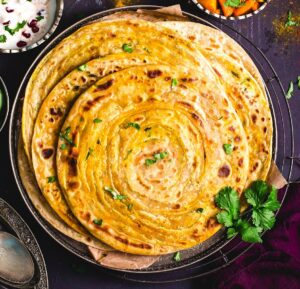
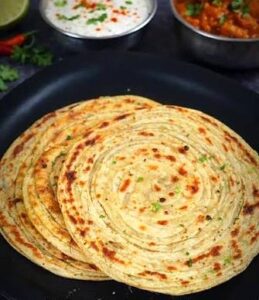
– Masala Ufrato: Add cumin seeds, crushed black pepper, red chilli powder,
or finely chopped green chillies to the dough for extra flavour.
– Methi Ufrato: Incorporate fresh or dried fenugreek leaves into the dough for an aromatic
and nutritious variation.
– Ajwain Ufrato: Add carom seeds (ajwain) to aid digestion and provide a distinctive flavour.
– Multigrain Ufrato: Replace part of the wheat flour with millet, barley, or gram flour
for added nutrition and texture.
Did You Know?
The technique used to make Ufrato—applying ghee, dusting with flour, rolling, and folding—
creates steam pockets during cooking that separate the layers naturally, giving the bread
its signature flaky texture. Similar layering techniques are found in many traditional
flatbreads across South Asia and Central Asia, but Ufrato retains its own distinctive
place in Thathai Bhatia cuisine.
Cultural Significance
Ufrato exemplifies the ingenuity of traditional Bhatia cooking, where simple pantry staples
such as flour, ghee, and salt are transformed into something special through skill and
technique. Often prepared for leisurely family breakfasts, weekend meals, and gatherings,
it reflects the community’s appreciation for wholesome, handcrafted breads. The layered
structure of Ufrato also symbolizes the richness and depth of Bhatia culinary traditions,
where patience and attention to detail are valued as much as the ingredients themselves.