
GAJARI MIRCHIYUN
(Carrot & Chilli Relish)

Recipe Overview
A vibrant and mildly spiced relish, Gajari Mirchiyun combines the natural sweetness of
carrots with the heat of green chillies. Finished with a light gram flour coating and
a hint of lime, this preparation offers a balanced flavour and texture that
complements a variety of meals.
Recipe Details
– Cuisine: Sindhi–Bhatia
– Course: Condiment / Accompaniment
– Diet: Vegetarian
– Servings: 3–4 servings
– Preparation Time: 15 minutes
– Cooking Time: 20 minutes
– Difficulty Level: Easy
Ingredients
– Carrots (large) – 2 nos. (peeled and cut into thin strips)
– Green chillies – 10 nos. (cut into thin strips)
– Gram flour (besan) – 1 tbsp
– Lime – 1 no. (juice)
– Oil – 1 tbsp
– Mustard seeds – ½ tsp
– Salt – to taste
Method
Step 1: Prepare the Ingredients
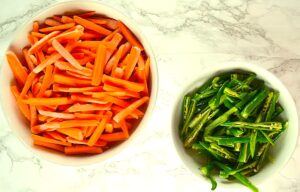
– Peel, wash, and cut the carrots into thin, elongated strips.
– Slice the green chillies lengthwise into thin strips.
Step 2: Temper the Spices


– Heat oil in a pan on medium flame.
– Add mustard seeds and allow them to splutter.
Step 3: Cook the Vegetables
– Add the carrot and green chilli strips along with salt.
– Cover the pan with a lid (traditionally a water-filled thali) and cook until the carrots
turn tender.
– Stir occasionally to ensure even cooking.
Step 4: Finish the Dish
– Remove the lid and add gram flour.
– Mix well and allow it to roast lightly for a few minutes.
– Add lime juice and mix thoroughly.
– Cook briefly until the gram flour is well incorporated and no raw taste remains.
Chef’s Tip
– Roast the gram flour gently to avoid burning and to enhance its nutty flavour.
– Adjust the number of green chillies depending on the desired level of heat.
Serving Suggestions
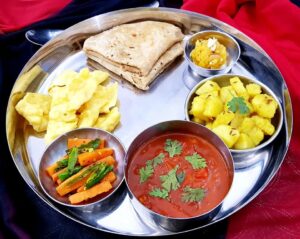
Serve:
– Hot, at room temperature, or chilled
– As an accompaniment to main meals
– Alongside flatbreads, rice dishes, or festive spreads
Variations
– Milder Version: Reduce the quantity of green chillies and increase the carrots for a
sweeter, less spicy relish.
– Extra Tangy Variation: Add additional lime juice or a small amount of dry mango powder
(amchur) for a sharper flavour.
– Mustard-Flavoured Variation: Add a pinch of coarsely ground mustard seeds while
cooking for added pungency.
– Pickle-Style Variation: Increase the oil slightly and add a pinch of turmeric powder to
create a longer-lasting, pickle-like accompaniment.
Storage & Make-Ahead Tips
– Store in an airtight container in the refrigerator.
– Best consumed within 2–3 days for optimal freshness and texture.
– The carrot and chilli strips can be prepared a day in advance and refrigerated separately.
– Add the lime juice just before serving if preparing ahead, as this helps preserve the
bright flavour and colour.
Avoid freezing, as the vegetables may lose their texture upon thawing.
Nutritional Insight
– Carrots are rich in beta-carotene, which the body converts into vitamin A,
supporting eye health and immunity.
– Green chillies provide vitamin C and antioxidants.
– Gram flour adds a small amount of plant-based protein and fibre.
– This relish is relatively low in fat, using only a modest quantity of oil.
– The combination of vegetables, spices, and lime juice contributes to a flavourful
accompaniment without adding significant calories.
Did You Know?
– The traditional practice of covering the pan with a water-filled thali helps cook
the vegetables gently while retaining moisture and flavour.
– Carrots and green chillies are a popular pairing in many Sindhi preparations,
balancing sweetness with heat.
– Gram flour is often added at the end of cooking to absorb excess moisture and
create the relish’s characteristic coating.
– Lime juice not only enhances flavour but also helps preserve the freshness of the dish.
Cultural Significance
Gajari Mirchiyun is a cherished accompaniment in Sindhi–Bhatia households, valued for its
ability to add colour, texture, and flavour to everyday meals. Prepared using simple,
readily available ingredients, it reflects the community’s resourceful approach to cooking.
Often served alongside flatbreads, rice dishes, and festive spreads, this relish
exemplifies the Bhatia preference for balancing flavours—combining sweetness, spice,
and tanginess in a single preparation. Its quick preparation and versatility have made
it a dependable staple across generations.