
How often have you heard your mother say ..
“Just take a pinch of this…and a handful of that”?
Literally meaning approximation from experience, ‘Andaz’ is a common term and one that is considered a bane by first time cooks.
Such approximation leads to inconsistencies in making any item, and one constantly worries if the end result would be the same.
Personal preferences also lead to the addition or elimination of certain ingredients from a dish – likewise spice levels are based on what the household is used to. The advantage of the aandaz however, is that the dish can never go wrong drastically. A few extra grams of tomatoes or a few extra millilitres of water will not make much of a difference and you may just be the proud inventor of your very own flavor!
To make the understanding of each recipe simple, simple volumetric measures like a pinch, teaspoons (tsp.), tablespoons (tblsp.) and teacups (cup) are used in most of the recipes.
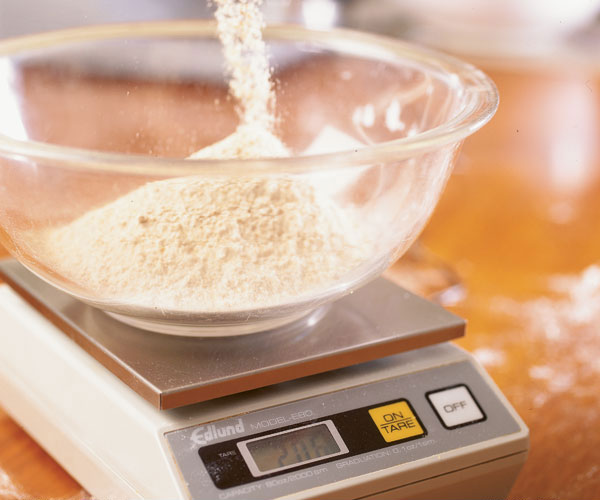
The volumetric content of these are pinch (1 ml.), teaspoon (5 ml.), tablespoon (15 ml.) and teacup (240 ml.)
In case of liquids, the liquid should be filled till the brim.
In case of solids, a heaped spoon should be used unless the recipe specifically states to level the spoon. Teacups should be again filled till the brim.

In other cases, recipes state the measurements in grams (gms.), kilograms (kg.) or the number of pieces of a particular item.
Conversion of commonly used ingredients in this website are given below –
All Lentils, Grams & Dry Beans | 1 cup | 200 gms. |
Rice | 1 cup | 200 gms. |
Flour | 1 cup | 150 gms. |
Milk | 1 cup | 240 ml. |
Yoghurt | 1 cup | 225 gms. |
Ghee / Butter | 1 cup | 200 gms. |
Ghee / Butter | 1 tblsp. | 15 gms. |
All powdered spices | 1 tsp. | 5 gms. |
All spice / condiment seeds | 1 tsp. | 3 gms |
Water | 1 cup | 240 ml. |
Coriander leaves | 1 tblsp. | 4 gms. |