
SAMBARIYA
(Stuffed Mixed Vegetables)
Recipe Overview
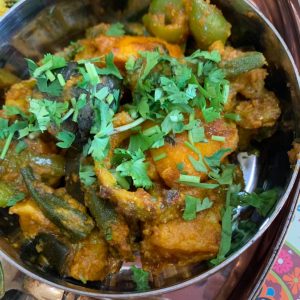
Sambariya is a traditional Thathai Bhatia specialty made with assorted vegetables stuffed
with a flavorful coriander-tomato masala. Rich, aromatic, and deeply satisfying,
Sambariya is known for its distinctive dark green appearance and layered flavors.
This dish can be prepared in two styles:
– Dry Sambariya – usually served for dinner with Phulko
– Gravied Sambariya – traditionally enjoyed for lunch with Dar Choka
The recipe below is for the classic dry version.
Recipe Details
– Cuisine: Sindhi–Bhatia
– Course: Main Course Vegetable
– Diet: Vegetarian
– Servings: 4–5
– Preparation Time: 30 minutes
– Cooking Time: 40 minutes
– Difficulty Level: Moderate
Ingredients
Vegetables
– Lady finger / Okra – 5 nos.
– Bitter gourd (medium sized) – 2 nos.
– Brinjal / Aubergine (medium sized) – 2 nos.
– Capsicum (large) – 1 no.
– Potatoes (medium sized) – 2 nos.
For Preparing Bitter Gourd
– Salt – 2 tbsp.
For Frying
– Oil – for frying
For Cooking
– Oil – 2 tbsp.
For the Stuffing
Main Ingredients
– Tomatoes (medium sized) – 2 nos. (finely chopped)
– Fresh coriander leaves – 30 gms. / 1 large bunch (ground into a paste)
– Gram flour – 2 tbsp.
– Green chillies – 4 nos. (finely chopped)
– Ginger – ½” piece (finely chopped)
Spices & Seasoning
– Cumin seeds – ½ tsp.
– Red chilli powder – ½ tsp.
– Coriander powder – ½ tsp.
– Salt – ¼ tsp.
– Sugar – ¼ tsp.
For Cooking the Stuffing
– Oil – 2 tbsp.
Method
Part A: Prepare the Stuffing
Step 1: Cook the Tomato Base


– Heat oil in a pan on a medium flame.
– Add the chopped tomatoes and cook for a few minutes until soft and pulpy.
Step 2: Add Aromatics & Herbs
– Add chopped green chillies, chopped ginger, and the ground coriander paste.
– Mix thoroughly and cook for a few minutes.
Step 3: Add Gram Flour & Spices
– Add gram flour, cumin seeds, red chilli powder, coriander powder, salt, and sugar.
– Stir continuously and cook until the gram flour is roasted and the mixture
thickens into a stuffing consistency.
– Remove from the flame and keep aside to cool slightly.
Part B: Prepare the Vegetables
Step 1: Prep the Bitter Gourd
– Apply salt generously on the bitter gourd pieces at least 1 hour before cooking.
– This traditional method helps reduce bitterness.
Step 2: Cut the Vegetables
– Slit the lady finger lengthwise.
– Cut the bitter gourd and capsicum into halves.
– Cut the potatoes and brinjals into quarters, ensuring they remain
intact enough for stuffing.
Step 3: Fry the Vegetables
– Heat oil for frying on a medium flame.
– Fry all the vegetables lightly until they are half-cooked.
– Remove and drain excess oil.
Part C: Assemble & Cook the Sambariya
Step 1: Stuff the Vegetables
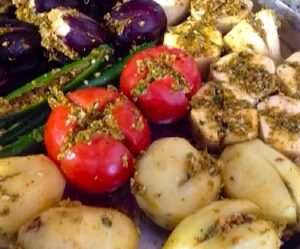
– Carefully fill the prepared masala stuffing into each vegetable.
Step 2: Final Cooking
– Heat 2 tbsp. oil in a broad pan.
– Arrange the stuffed vegetables gently in the pan.
– Cover and cook on a slow flame until the vegetables are fully tender.
– Turn occasionally with care to prevent the stuffing from spilling out.
Step 3: Finish & Serve
– Adjust seasoning if required.
– Serve hot.
Chef’s Tip – Gravied Sambariya
The above recipe is for the dry preparation. For the traditional gravied version:
– Add 3 additional finely chopped tomatoes while heating the oil in the final cooking stage.
– Add a little water to create a light gravy before adding the stuffed vegetables.
– Fresh fenugreek leaves (methi) can also be added along with the tomatoes to enhance
the flavor and aroma.
Serving Suggestions
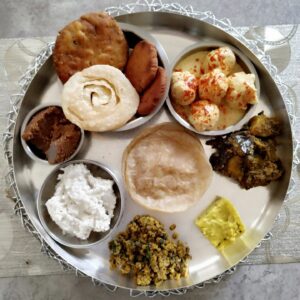

For Lunch
– Gravied Sambariya is served with Dar Choka.
For Dinner
– Dry Sambariya is served hot with Phulko – https://panjakhada.com/phulko/
Variations
– Gravied Sambariya (Lunch Version) : The traditional lunch-style preparation includes
additional chopped tomatoes and a little water to create a light gravy.
Fresh fenugreek leaves (methi) may also be added for extra flavour and aroma.
– Methi Sambariya : Add a handful of finely chopped fresh fenugreek leaves to the stuffing
mixture. The slight bitterness of methi complements the sweet, tangy, and spicy
flavours beautifully.
– Green Sambariya : Increase the quantity of coriander and add fresh mint leaves
to create a more herbaceous stuffing with a deeper green colour.
– Spicy Sambariya : Increase the quantity of green chillies and red chilli powder for a
more robust and fiery version.
– No-Fry Version : For a lighter preparation, the vegetables may be lightly steamed or
sautéed instead of deep-fried before stuffing and final cooking.
Storage & Make-Ahead Tips
– Sambariya can be refrigerated in an airtight container for up to 2 days.
– Reheat gently on a low flame to avoid breaking the stuffed vegetables.
– The stuffing can be prepared 1 day in advance and stored refrigerated until required.
– Vegetables may be cleaned, cut, and partially fried ahead of time to simplify final assembly.
– In fact, Sambariya often tastes even better a few hours after cooking as the vegetables
absorb the flavours of the stuffing more completely.
– The gravied version may require a small amount of water while reheating to
restore its consistency.
– Freezing is generally not recommended, as the vegetables may become too soft
after thawing.
Nutritional Insight
– Sambariya combines a variety of vegetables, making it rich in fiber, vitamins,
and antioxidants.
– Bitter gourd is traditionally valued for helping regulate blood sugar levels.
– Okra supports digestion due to its high soluble fiber content.
– Brinjal and capsicum contribute antioxidants and minerals while gram flour
adds plant-based protein.
– Since multiple vegetables are cooked together, Sambariya is considered a
wholesome and nutritionally balanced preparation.
Cultural Significance
Sambariya is regarded as one of the more elaborate and celebratory vegetable preparations
in Thathai Bhatia cuisine. The process of individually stuffing and cooking each vegetable
reflects the community’s traditional slow-cooking culinary style, where patience
and layering of flavors were deeply valued.
The dish is often associated with family lunches, festive gatherings, and special weekend
meals where a variety of vegetables were brought together in a single rich preparation.
The contrast between the dry dinner version and the gravied lunch version also reflects
the adaptability and practicality of traditional Bhatia cooking traditions.
Did You Know?
– The word Sambariya is believed to derive from the concept of bringing together a variety
of vegetables in a single preparation, creating a colourful and flavourful medley.
– Stuffed vegetable dishes have long been considered special-occasion foods in many
Indian communities because of the time and care involved in their preparation.
– Bitter gourd, one of the key vegetables used in Sambariya, is traditionally valued for
its digestive and blood sugar-regulating properties.
– Coriander-based stuffing is a distinctive feature of many Sindhi and Bhatia vegetable
preparations, providing freshness, colour, and depth of flavour.
– The characteristic dark green colour of Sambariya comes primarily from the generous
use of fresh coriander in the stuffing.
– In traditional households, preparing Sambariya was often a family activity, with different
members helping to clean, stuff, and arrange the vegetables before cooking.
– The same stuffing recipe is frequently adapted across households and may be used for
stuffed brinjal, capsicum, bitter gourd, or even tomatoes, making it one of the most
versatile masalas in Thathai Bhatia cuisine.