
KOKI
(Thick Unleavened Bread)

Recipe Overview
Koki is a classic Thathai Bhatia flatbread, known for its thick texture and slow cooking
process. Crisp on the outside and soft within, it is enriched with ghee and traditionally
enjoyed as a hearty breakfast or a wholesome accompaniment.
Recipe Details
– Cuisine: Sindhi–Bhatia
– Course: Breakfast / Bread
– Diet: Vegetarian
– Servings: 2 kokis
– Preparation Time: 15 minutes (+ resting time)
– Cooking Time: 20–25 minutes
– Difficulty Level: Easy
Ingredients
For the Dough
– Whole wheat flour – 2 cups
– Ghee (melted) – 3 tbsp
– Salt – to taste
– Water – as required (to knead dough)
For Cooking
– Ghee – 2 tbsp (or as required)
Method
Step 1: Prepare the Dough


– In a bowl (paat), combine whole wheat flour and salt.
– Add melted ghee and rub it into the flour.
– Gradually add water and knead into a firm dough.
– Cover with a damp cloth and allow to rest for 30 minutes.
Step 2: Shape the Koki
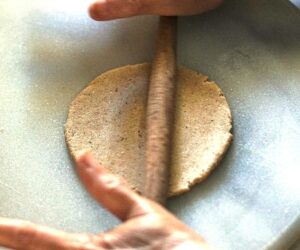
– Divide the dough into 2 equal portions.
– Roll each portion into a disc approximately 6 inches in diameter and ½–¾ inch thick.
– Ensure the koki is thick and not rolled thin like a roti.
Step 3: Cook the Koki
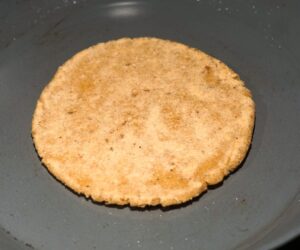
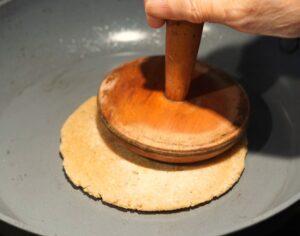
– Heat a tawa on low flame.
– Place the rolled dough on the tawa.
– Cook on a slow flame, turning 2–3 times.
– Apply ghee at intervals while cooking.
– Lightly prick the surface with a fork to allow ghee to seep in.
– Cook until golden brown on both sides (approx. 10–15 minutes).
Chef’s Tip
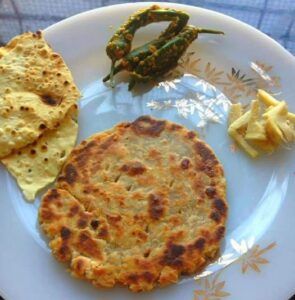

Slow cooking on a low flame is essential to ensure the koki cooks evenly from within
while developing a crisp outer layer.
Variations

– Malai Koki: Replace water with milk and cream for a richer texture.
– Mithi Koki: Substitute salt with 4 tbsp sugar or jaggery; optionally add dry fruits.
– Besan Koki: Replace whole wheat flour partially or fully with gram flour.
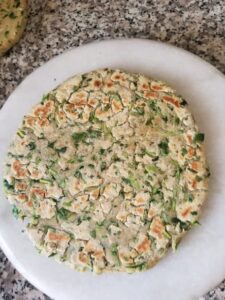
– Missi Koki: Add chopped green chillies, ginger, and coriander leaves while kneading.
– Karele ji Kat ji Koki:
- Grate only the skin of bitter gourd (karela).
- Apply salt and rest for 10–15 minutes to reduce bitterness.
- Squeeze out excess water and add to the dough along with chopped chillies, ginger, and coriander.
Serving Suggestions
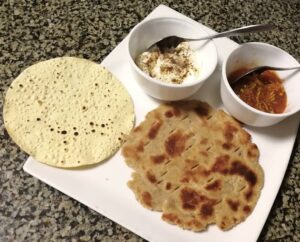

Serve Koki hot with:
– Curds (yoghurt)
– Pickle
– Chopped and lightly salted ginger
– Tea
Storage & Make-Ahead Tips
– Best enjoyed fresh and hot
– Dough can be prepared in advance and refrigerated
Nutritional Insight
– Whole wheat provides fibre
– Ghee adds richness and energy
– A filling and sustaining breakfast option
Did You Know?
Unlike regular flatbreads, Koki is deliberately cooked slowly and thick, making it more rustic,
hearty, and travel-friendly, often carried as a sustaining meal.
Cultural Significance
Koki is one of the most iconic and beloved breads of the Sindhi–Bhatia community,
often regarded as the ultimate comfort breakfast. Unlike regular rotis or chapatis,
Koki is intentionally made thick, generously enriched with ghee, and cooked slowly to
develop its characteristic crisp exterior and soft interior.
Traditionally, Koki was a practical travel food due to its ability to remain fresh for several
hours without losing its texture. It was commonly packed for long journeys, pilgrimages,
and outdoor gatherings, often accompanied by pickle, curd, or fresh ginger.
In many Bhatia households, waking up to the aroma of Koki roasting on the tawa is a
cherished childhood memory and a symbol of home-cooked comfort.
Koki also reflects the resourcefulness of Sindhi and Bhatia cuisine, where simple pantry
staples such as flour, ghee, and spices are transformed into a nourishing and satisfying
meal. Its many variations demonstrate how families adapted the recipe according
to season, availability of ingredients, and personal preferences.
Today, Koki remains a staple breakfast dish and continues to be passed down through
generations as an enduring symbol of Thathai Bhatia culinary heritage.