
CHOKA
(Boiled Rice)

Recipe Overview
Choka (boiled rice) forms the foundation of a traditional Thathai Bhatia meal.
Most Bhatia curries and lentil preparations are paired with plain Choka, making it an
essential component of everyday dining. The term Sakri is also used to describe a meal
centred around rice, while Bhath (derived from Gujarati) is specifically used in the
context of the classic combination—Dar, Bhath, Curry (lentils, rice, and curry).
Recipe Details
– Cuisine: Sindhi–Bhatia
– Course: Main (Rice Dish)
– Diet: Vegetarian
– Servings: 3–4
– Preparation Time: 10 minutes (+ soaking time)
– Cooking Time: 20 minutes
– Difficulty Level: Easy
Ingredients
Main Ingredients
– Rice – 1 cup
For Cooking
– Salt – to taste
– Ghee – ½ tbsp
Method
Step 1: Soak

– Wash and soak the rice in water for approximately 1 hour.
Step 2: Cook the Rice

– In a pot (toap), bring water to a boil.
– Add the soaked rice and salt.
– Cook until the rice is soft and fully done.
Step 3: Drain & Simmer

– Drain excess water if required.
– Place the pot on a tawa and allow the rice to simmer gently for about 10 minutes.
Step 4: Finish
– Add ghee and mix gently.
– Serve hot.
Cooking Methods
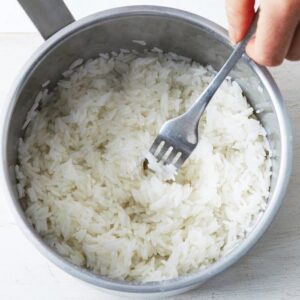
This recipe uses the draining method of cooking rice, where the grains are boiled in
excess water and the surplus water is drained once the rice is fully cooked.
This traditional Bhatia technique helps produce light, separate, and fluffy grains.
An alternative approach is the absorption method, in which rice is cooked with
a measured quantity of water that is completely absorbed during cooking.
While both methods are widely used, the draining method is often preferred in Thathai
Bhatia households for everyday Choka, as it allows greater control over texture and
prevents the rice from becoming sticky or mushy.
Chef’s Tip
Simmering the rice on a tawa after draining helps achieve a fluffy texture while preventing
the rice from sticking or becoming mushy.
Serving Suggestions
Serve Choka hot with:
– Lentil preparations (Dar)
– Bhatia curries
– Accompaniments like pappad and yoghurt
Traditionally, meals begin with Choka and are followed by breads such as Phulko.
Variations
– Red Rice Choka: Replace white rice with traditional red rice for a nuttier flavour,
higher fibre content, and added nutritional value. This variation is commonly enjoyed
in Thathai Bhatia households.
– Jeera Choka: Add ½ teaspoon cumin seeds to the boiling water or temper them in ghee
before mixing with the cooked rice for a subtle aromatic flavour.
– Ghee-Free Version: Omit the ghee for a lighter preparation or when pairing the rice
with richer curries.
– Festival Variation: For festive meals, garnish the cooked rice with a little extra ghee
and pair it with special accompaniments.
– Soft Choka for Comfort Meals: Increase the water slightly to create a softer texture,
often preferred for children, the elderly, or during convalescence.
Storage & Make-Ahead Tips
– Best consumed fresh
– Can be refrigerated and reheated with a sprinkle of water
Nutritional Insight
– Primary source of carbohydrates
– Easily digestible
– Complements protein-rich dals and fibre-rich vegetables
Did You Know?
The Bhatia tradition of beginning a meal with Choka—and only then moving to breads—
is a distinctive culinary practice, setting it apart from most Indian dining patterns.
Cultural Significance
Choka is far more than a staple grain in Thathai Bhatia cuisine—it is the heart of the
traditional meal. The customary practice of beginning a meal with rice before moving
on to flatbreads reflects a distinctive dining tradition preserved across generations.
The phrase “Dar, Bhath, Curry” represents a complete and balanced meal, symbolising
nourishment, simplicity, and hospitality. Rice-centred meals, known as Sakri,
remain an integral part of everyday life and family gatherings.