
MESU
(Gram Flour Fudge)

Recipe Overview
Mesu, also known as Mesuk or Mesur Paak, is a traditional Sindhi–Bhatia sweet prepared
from gram flour, sugar syrup, and generous quantities of ghee. It is closely related to the
porous variation of Mysore Pak popular in Western and Northern India and
is celebrated for its characteristic honeycomb-like texture filled with tiny air pockets.
The hallmark of a well-made Mesu lies in its delicate balance of richness and lightness —
crisp yet soft, porous yet melt-in-the-mouth. This distinctive texture develops
through a careful cooking process where hot ghee interacts with sugar syrup
and gram flour, creating tiny air pockets throughout the sweet.
Mesu is often prepared during ceremonies, festivals, and traditional family celebrations
and carries special significance in Sindhi–Bhatia households.
Recipe Details
– Cuisine: Sindhi–Bhatia
– Course: Festive Sweet / Dessert
– Diet: Vegetarian
– Servings: 12–16 pieces
– Preparation Time: 15 minutes
– Cooking Time: 35–45 minutes
– Setting Time: 1–2 hours
– Difficulty Level: Moderate to Difficult
Ingredients
Main Ingredients
– Gram flour (Besan) – 1 cup
– Sugar – 1½ cups
– Water – 1 cup
– Ghee – 3 cups
– Ghee – ½ tsp. (for greasing the thali)
Flavouring & Garnish Ingredients
– Saffron – a few strands
– Cardamom powder – a pinch
– Pistachios (unsalted, finely chopped) – 2 nos.
Method
Step 1: Prepare the Sugar Syrup
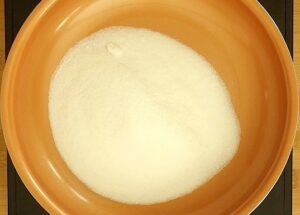


– In a vessel, combine sugar and water.
– Heat on a medium flame and stir until the sugar dissolves completely.
– Continue cooking until the syrup reaches one-string consistency.
– Keep aside and maintain warmth.
Step 2: Prepare the Gram Flour Mixture
– In a heavy-bottomed vessel, melt the ghee on a low flame.
– Gradually add gram flour and mix continuously until a thin,
smooth batter forms without lumps.
– Cook gently while stirring continuously.
Step 3: Combine and Cook

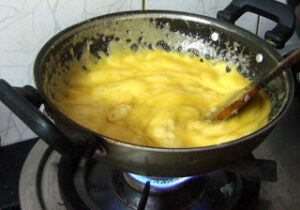
– Slowly add the prepared sugar syrup to the gram flour mixture while stirring continuously.
– Cook on a low flame and continue stirring steadily.
– As the mixture cooks, it will gradually become thicker and begin separating from
the sides of the vessel. Tiny bubbles and air pockets will begin to appear.
– Add saffron and mix well.
Step 4: Set the Mesu
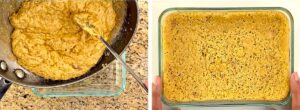
– Grease a thali lightly with ghee.
– Pour the hot Mesu mixture immediately into the thali and spread evenly.
– Sprinkle chopped pistachios and cardamom powder on top.
– Allow the sweet to cool and set naturally.
– Small pores and tiny holes will form as the Mesu cools — this is the characteristic
signature of authentic Mesu.
Step 5: Cut and Serve
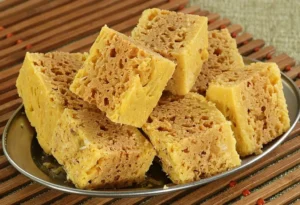
– Once fully set, cut into small squares or diamond-shaped pieces.
To Serve
Mesu is a rich and indulgent sweet and is traditionally served with Besan / Sev,
creating a popular sweet-and-savoury contrast.
Mesu is also traditionally distributed during Panuma (pregnancy ceremony)
and served during festive and family occasions.
Chef’s Tips
For Perfect Porous Mesu
– Cook on a low flame throughout the process and stir continuously.
– The sugar syrup must reach exactly one-string consistency.
– Add ghee gradually rather than rushing the process.
– Properly cooked Mesu will become airy, slightly frothy, and begin leaving the
sides of the vessel.
Troubleshooting
If the sugar syrup is undercooked:
– The mixture may remain sticky and fail to set. Continue cooking on low heat until it
expands and separates from the pan.
– If the syrup becomes overcooked:
Add 2–3 tbsp. boiling water, stir over low heat, and restore the syrup to one-string
consistency.
If Mesu fails to set:
Return the mixture to the pan, add 2 tbsp. hot ghee, and cook for a few additional
minutes until bubbles and air pockets begin forming again.
Nutritional Insight
Gram flour contributes plant protein and dietary fibre, while ghee provides energy and
richness. Dry fruits and saffron add micronutrients and antioxidants. Due to its high
ghee and sugar content, Mesu is best enjoyed in moderation.
Cultural Significance
Mesu holds a special place in Sindhi–Bhatia culinary traditions and is associated with
celebrations, family rituals, and auspicious occasions. It is traditionally prepared
and gifted during Panyoma (pregnancy ceremony) — an important celebration honouring
motherhood and blessings for the mother-to-be and child. Rich sweets like Mesu
symbolise abundance, prosperity, nourishment, and good wishes for the family.
Storage & Make-Ahead Tips
– Allow Mesu to cool completely before storing
– Store only in a clean, dry airtight glass or metal container
– Place parchment paper between layers to preserve the delicate porous texture
– Shelf life: 2–3 weeks at room temperature
– Avoid refrigeration, as chilled ghee can harden and affect the melt-in-the-mouth texture
Variations

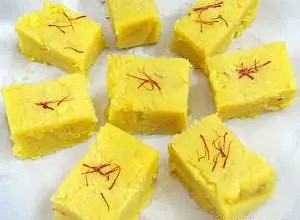

– Milk Mesu: Replace part of the gram flour with milk powder for a softer, smoother texture
– Nut Mesu: Add almonds and cashews for richer flavour
– Saffron Mesu: Increase saffron for a stronger festive aroma
– Rose Mesu: Add a few drops of rose essence for a floral touch
Did You Know?
The tiny pores and honeycomb-like holes seen in Mesu are not flaws — they are
considered the mark of a perfectly prepared sweet. The more delicate and evenly
distributed the air pockets, the more prized the Mesu is considered to be.